The Dreyfus Affair (which I've mentioned on this blog before) was an important catalyst for world Jewry, inspiring Theodor Herzl to organize early Zionists into a World Zionist Congress. There is a wonderful Alfred Dreyfus exhibit available here:
http://www.dreyfus.culture.fr/en/index.htm. It features a wealth of information, multimedia presentations, documents of the Dreyfus family, life in France in the 1890s, and news surrounding Dreyfus and his trials.
To explore the role of political cartoons in the public conversations surrounding the Affair, check out:
1906, Dreyfus rehabilitated : Caricatures - page 1
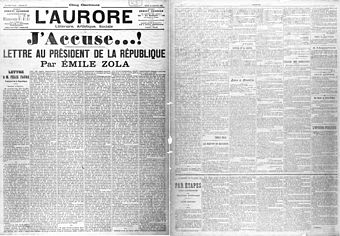
Dreyfus' trials revealed deep social injustice toward Jews, but they also revealed that not all non-Jews are anti-Semites. The most notable among the friends Jews found in this dark time is Emile Zola, who wrote a famous letter to the President of the Republic of France titled "J'Accuse!" (I accuse!), published in a major newspaper. You can find a wiki document featuring the original article and its translation here: http://en.wikisource.org/wiki/J%27accuse.
Showing posts with label Dreyfus. Show all posts
Sunday, November 13, 2011
"1906, Dreyfus rehabilitated" Online Exhibit
Labels:
anti-semitism,
articles,
Dreyfus,
ethics,
Herzl,
history,
Israel,
palestine,
sixth grade,
Zionism
Monday, December 13, 2010
Naches from my students
My sixth graders at Congregation Etz Chayim, in Palo Alto, blew me away this past month. As part of my teaching on Israel, I gave them a quiz on Ancient Israel and the beginnings of Modern Zionism. It was similar to quizzes I had given in the past two years, but I raised the stakes... I offered an "extra-awesome bonus" which would give them automatic full-credit on the quiz plus a prize if they could give a well-conceived, thorough answer to the following question: What were the differences between traditional Jewish yearnings for a return the the Land of Israel and Theodor Herzl's Zionism? It was a serious question which I thought would allow one or two kids to show their deep understanding of the material we had covered. One or two, AT MOST, I thought could synthesize relevant answers.
I was wrong.
Five kids--eleven-year-old, mind you--gave AWESOME answers! So, I'm honoring them by sharing their responses to you. You'll see some recurrent themes. Other possible answers could have mentioned messianic beliefs about the connection between returning to the Land of Israel and the end of days, or traditional desires for a Davidic monarchy versus Herzl's ideas about more modern, European-style political structures, or traditional theological arguments versus cultural, pragmatic arguments for a Jewish homeland.
Answer 1, from E.
The difference between Herzl's Zionism and traditional Zionism is that Herzl wanted to just get the Jews away from the pogroms and other events; he wanted to bring them to another country/state (Uganda), even if it wasn't Israel. He wanted to get the Jews away from harm, even if it made it harder to get them back into Eretz Yisrael. Traditional the Jews thought only Israel was fit for the Jewish homeland and that any other place would be almost against God's will.
Answer 2, from M.
The difference between Theodor Herzl's Zionism and traditional yearnings to return Jews to Israel was the fact that Herzl's idea was Political Zionism. Herzl was willing to negotiate with other world leaders to set up a political State of Israel. He knew Jews would need a place to live, and fast. Anti-Semitism was growing around the world, in the form of pogroms, and the Jewish people needed shelter. Herzl continuously stressed the fact that the Jewish State could be anywhere; he even suggested Argentina. The difference of Herzl's Zionism is to set up a political Jewish country as opposed to be able to specifically in Palestine. The traditional yearning was the hope to live in Palestine as a culture.
Answer 3, from D.
Theodor Herzl, unlike traditional Jewish nationalism, believed that this Jewish safe haven could be anywhere and that getting land in Israel was less important than having a Jewish country run by Jews, with Jews in control of the government and in the majority. He wanted eventually to settle in Israel, but he knew anywhere would do temporarily. Traditional nationalism was that this place needed to be in Israel--the Promised Land.
Answer 4, from O.
Herzl's Zionism was more to protect his people and have a place where they could fit in than was traditional yearnings for Israel. The traditional yearnings were people wanting God to let them go back to their Promised Land, where they belong. Herzl became a Zionist because he gave up hope of Jews ever being able to fit in. That fact made him stand out. When the other Zionists heard the Uganda plan, many of them were too traditional to accept it. They said that they would only accept the Promised Land, not some random part of Africa. Herzl was all for the plan, hoping it would build a safe haven for Jewish and stop our people's suffering.
Answer 5, from V.
Herzl's Zionism was the belief that Jews should have their own state where they don't have to deal with pogroms and other antisemitic attacks. On the other hand, returning to the Land of Israel as the "Promised Land" will not cease the antisemitic attacks, it will only fulfill the Jews' spiritual beliefs.
I was wrong.
Five kids--eleven-year-old, mind you--gave AWESOME answers! So, I'm honoring them by sharing their responses to you. You'll see some recurrent themes. Other possible answers could have mentioned messianic beliefs about the connection between returning to the Land of Israel and the end of days, or traditional desires for a Davidic monarchy versus Herzl's ideas about more modern, European-style political structures, or traditional theological arguments versus cultural, pragmatic arguments for a Jewish homeland.
Answer 1, from E.
The difference between Herzl's Zionism and traditional Zionism is that Herzl wanted to just get the Jews away from the pogroms and other events; he wanted to bring them to another country/state (Uganda), even if it wasn't Israel. He wanted to get the Jews away from harm, even if it made it harder to get them back into Eretz Yisrael. Traditional the Jews thought only Israel was fit for the Jewish homeland and that any other place would be almost against God's will.
Answer 2, from M.
The difference between Theodor Herzl's Zionism and traditional yearnings to return Jews to Israel was the fact that Herzl's idea was Political Zionism. Herzl was willing to negotiate with other world leaders to set up a political State of Israel. He knew Jews would need a place to live, and fast. Anti-Semitism was growing around the world, in the form of pogroms, and the Jewish people needed shelter. Herzl continuously stressed the fact that the Jewish State could be anywhere; he even suggested Argentina. The difference of Herzl's Zionism is to set up a political Jewish country as opposed to be able to specifically in Palestine. The traditional yearning was the hope to live in Palestine as a culture.
Answer 3, from D.
Theodor Herzl, unlike traditional Jewish nationalism, believed that this Jewish safe haven could be anywhere and that getting land in Israel was less important than having a Jewish country run by Jews, with Jews in control of the government and in the majority. He wanted eventually to settle in Israel, but he knew anywhere would do temporarily. Traditional nationalism was that this place needed to be in Israel--the Promised Land.
Answer 4, from O.
Herzl's Zionism was more to protect his people and have a place where they could fit in than was traditional yearnings for Israel. The traditional yearnings were people wanting God to let them go back to their Promised Land, where they belong. Herzl became a Zionist because he gave up hope of Jews ever being able to fit in. That fact made him stand out. When the other Zionists heard the Uganda plan, many of them were too traditional to accept it. They said that they would only accept the Promised Land, not some random part of Africa. Herzl was all for the plan, hoping it would build a safe haven for Jewish and stop our people's suffering.
Answer 5, from V.
Herzl's Zionism was the belief that Jews should have their own state where they don't have to deal with pogroms and other antisemitic attacks. On the other hand, returning to the Land of Israel as the "Promised Land" will not cease the antisemitic attacks, it will only fulfill the Jews' spiritual beliefs.
Labels:
anti-semitism,
Dreyfus,
God,
Herzl,
Israel,
palestine,
quizzes,
sixth grade,
Zionism
Monday, October 22, 2007
More on the Dreyfus Affair and Cartoons
The following article from the New York Times is about art, artists, and the Dreyfus Affair. It specifically mentions the "Museum of Horrors" cartoons (like the one we examined in class, depicting Alfred Dreyfus as one head of the Jewish hydra). Did you know that Monet supported Dreyfus and Degas used the Affair to turn his back on close Jewish friends?
NEW YORK; In France's Dreyfus Affair, The Artists, Too, Asked, 'Which Side Are You On? - New York Times
On this next web page, read the text, then click on Media and Archives links (right side of page) to see more cartoons, including another Museum of Horrors cartoon showing Dreyfus as an inhuman beast. http://www.dreyfus.culture.fr/en/the-french-and-the-dreyfus-affair/jews-in-france/Anti-semitism-at-the-turn-of-the-century.htm?#m98
The same www.dreyfus.culture.fr site has a wealth of images, letters, and historical writings about the Affair. This next link depicts a board game produced by Dreyfus supporters (known in French as Dreyfusards) which ends with truth emerging from a well.
http://www.dreyfus.culture.fr/en/pedagogie/media-pedago-58-doc-Dreyfusard_board_game.htm
Dreyfusards also created a calendar for 1899 showing Dreyfus' wife, his supporters, images of his prison on Devil's Island, and Justice. "Revision" is the French term that refers to the demand that Dreyfus be given a retrial.
Finally, the website has a section discussing what happened after the Dreyfus Affair, both to Dreyfus himself and to French and European society.
NEW YORK; In France's Dreyfus Affair, The Artists, Too, Asked, 'Which Side Are You On? - New York Times
On this next web page, read the text, then click on Media and Archives links (right side of page) to see more cartoons, including another Museum of Horrors cartoon showing Dreyfus as an inhuman beast. http://www.dreyfus.culture.fr/en/the-french-and-the-dreyfus-affair/jews-in-france/Anti-semitism-at-the-turn-of-the-century.htm?#m98
The same www.dreyfus.culture.fr site has a wealth of images, letters, and historical writings about the Affair. This next link depicts a board game produced by Dreyfus supporters (known in French as Dreyfusards) which ends with truth emerging from a well.
http://www.dreyfus.culture.fr/en/pedagogie/media-pedago-58-doc-Dreyfusard_board_game.htm
Dreyfusards also created a calendar for 1899 showing Dreyfus' wife, his supporters, images of his prison on Devil's Island, and Justice. "Revision" is the French term that refers to the demand that Dreyfus be given a retrial.
Finally, the website has a section discussing what happened after the Dreyfus Affair, both to Dreyfus himself and to French and European society.
Labels:
anti-semitism,
Dreyfus,
sixth grade
Subscribe to:
Comments (Atom)