Showing posts with label Israel. Show all posts

Sunday, November 13, 2011

"1906, Dreyfus rehabilitated" Online Exhibit

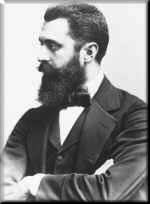
The Dreyfus Affair (which I've mentioned on this blog before) was an important catalyst for world Jewry, inspiring Theodor Herzl to organize early Zionists into a World Zionist Congress. There is a wonderful Alfred Dreyfus exhibit available here:
http://www.dreyfus.culture.fr/en/index.htm. It features a wealth of information, multimedia presentations, documents of the Dreyfus family, life in France in the 1890s, and news surrounding Dreyfus and his trials.

To explore the role of political cartoons in the public conversations surrounding the Affair, check out:
1906, Dreyfus rehabilitated : Caricatures - page 1


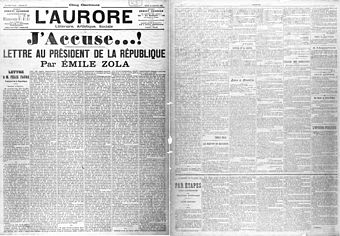
Dreyfus' trials revealed deep social injustice toward Jews, but they also revealed that not all non-Jews are anti-Semites. The most notable among the friends Jews found in this dark time is Emile Zola, who wrote a famous letter to the President of the Republic of France titled "J'Accuse!" (I accuse!), published in a major newspaper. You can find a wiki document featuring the original article and its translation here: http://en.wikisource.org/wiki/J%27accuse.

Sunday, October 2, 2011

Awe-Inspiring Spectacle of the Yom Kippur Ritual of the Temple

Here are some sites from today's Etz Chayim sixth grade lesson on the awe-inspiring spectacle of the Yom Kippur Ritual of the Temple.

 First we looked at http://www.sci.brooklyn.cuny.edu/~mtwersky/, which charts out the entire Yom Kippur Avodah (service) set of rituals. This includes descriptions of the parade leading to the Temple, explanations of all of the sacrifices in detail, diagrams and descriptions of the High Priest's (Kohein Gadol) clothing. In addition to learning about the sacrificial system, we were able to see the similarities in dress between the Kohein Gadol and Ashkenazic Torah scrolls.

Next, we looked at the Israel Museum in Jerusalem's Interactive Second Temple Model (http://www.english.imjnet.org.il/htmls/page_1382.aspx?c0=14816&bsp=12729), which allowed us to appreciate the grandeur of the Second Temple and how the building added to the sense of amazement and spectacle that the Temple inspired.

We concluded by opening a discussion (which we will continue on Wednesday) about what the purposes of the Temple sacrifices were (referencing http://www.jewfaq.org/qorbanot.htm) and read one prominent contemporaries response to the bloodiness and primitive emotion of the sacrifices themselves (Bradley Shavit Artson, at http://www.myjewishlearning.com/texts/Bible/Weekly_Torah_Portion/vayikra_artson5762.shtml).

Monday, December 13, 2010

Naches from my students

My sixth graders at Congregation Etz Chayim, in Palo Alto, blew me away this past month.  As part of my teaching on Israel, I gave them a quiz on Ancient Israel and the beginnings of Modern Zionism.  It was similar to quizzes I had given in the past two years, but I raised the stakes... I offered an "extra-awesome bonus" which would give them automatic full-credit on the quiz plus a prize if they could give a well-conceived, thorough answer to the following question: What were the differences between traditional Jewish yearnings for a return the the Land of Israel and Theodor Herzl's Zionism? It was a serious question which I thought would allow one or two kids to show their deep understanding of the material we had covered.  One or two, AT MOST, I thought could synthesize relevant answers.

I was wrong.

Five kids--eleven-year-old, mind you--gave AWESOME answers!  So, I'm honoring them by sharing their responses to you.  You'll see some recurrent themes.  Other possible answers could have mentioned messianic beliefs about the connection between returning to the Land of Israel and the end of days, or traditional desires for a Davidic monarchy versus Herzl's ideas about more modern, European-style political structures, or traditional theological arguments versus cultural, pragmatic arguments for a Jewish homeland.

 Answer 1, from E.
The difference between Herzl's Zionism and traditional Zionism is that Herzl wanted to just get the Jews away from the pogroms and other events; he wanted to bring them to another country/state (Uganda), even if it wasn't Israel.  He wanted to get the Jews away from harm, even if it made it harder to get them back into Eretz Yisrael.  Traditional the Jews thought only Israel was fit for the Jewish homeland and that any other place would be almost against God's will.

Answer 2, from M.
The difference between Theodor Herzl's Zionism and traditional yearnings to return Jews to Israel was the fact that Herzl's idea was Political Zionism.  Herzl was willing to negotiate with other world leaders to set up a political State of Israel.  He knew Jews would need a place to live, and fast.  Anti-Semitism was growing around the world, in the form of pogroms, and the Jewish people needed shelter.  Herzl continuously stressed the fact that the Jewish State could be anywhere; he even suggested Argentina.  The difference of Herzl's Zionism is to set up a political Jewish country as opposed to be able to specifically in Palestine.  The traditional yearning was the hope to live in Palestine as a culture. 

Answer 3, from D.
Theodor Herzl, unlike traditional Jewish nationalism, believed that this Jewish safe haven could be anywhere and that getting land in Israel was less important than having a Jewish country run by Jews, with Jews in control of the government and in the majority.  He wanted eventually to settle in Israel, but he knew anywhere would do temporarily.  Traditional nationalism was that this place needed to be in Israel--the Promised Land.


Answer 4, from O.
Herzl's Zionism was more to protect his people and have a place where they could fit in than was traditional yearnings for Israel.  The traditional yearnings were people wanting God to let them go back to their Promised Land, where they belong.  Herzl became a Zionist because he gave up hope of Jews ever being able to fit in.  That fact made him stand out.  When the other Zionists heard the Uganda plan, many of them were too traditional to accept it.  They said that they would only accept the Promised Land, not some random part of Africa.  Herzl was all for the plan, hoping it would build a safe haven for Jewish and stop our people's suffering.


Answer 5, from V.
Herzl's Zionism was the belief that Jews should have their own state where they don't have to deal with pogroms and other antisemitic attacks.  On the other hand, returning to the Land of Israel as the "Promised Land" will not cease the antisemitic attacks, it will only fulfill the Jews' spiritual beliefs.

Monday, November 29, 2010

NOVA | Quest for Solomon's Mines

During Thanksgiving break, I watched a terrific episode of NOVA, cosponsored by National Geographic, which showed the latest evidence supporting the existence of Israelite David and Solomon. I totally recommend this episode, available streaming online: NOVA | Quest for Solomon's Mines. On the same page, you can also find links to other Nova resources discussing various aspects of biblical archaeology (including its purpose) and topics related to Ancient Israel, including how NOVA has recreated the First Temple and claims about finding King David's palace.

Wednesday, October 13, 2010

Walking the Bible (children's edition) on sale


Walking the Bible: An Illustrated Journey for Kids Through the Greatest Stories Ever Told, by Bruce Feiler and Sasha Meret, is a terrific illustrated (with historic maps and contemporary photos) book that would be a wonderful complement to my sixth graders' study of Biblical Israel. It's currently on huge discount at Amazon.

PA adopts textbook, banned in Israel, offering both sides' narratives - Haaretz Daily Newspaper | Israel News

PA adopts textbook, banned in Israel, offering both sides' narratives - Haaretz Daily Newspaper | Israel News

Tuesday, December 2, 2008

In 50 years, kibbutz movement has undergone many changes

During the past few weeks, the sixth graders and I have been studying about Kibbutzim, Jewish agricultural communes in Israel. The first kibbutz (Deganyah) was started at the time of the Second Aliyah, and the movement continued to grow, prosper, and diversify over the following several decades. Today, there are still kibbutzim, but most of them are extremely different from their predecessors.

For a primer on the Kibbutz Movement, check out the following links:

List of kibbutzim - Wikipedia, the free encyclopedia

Kibbutz - Wikipedia, the free encyclopedia

http://www.jewishvirtuallibrary.org/jsource/Society_&_Culture/kibbutz.html (on how kibbutzim have changed over time)

In 50 years, kibbutz movement has undergone many changes (news article)

Monday, November 3, 2008

As Israeli Elections Are Called, Livni Is Assessed - NYTimes.com

As new head of the ruling Kadima party, Tzipi Livni has failed to assemble a majority coalition that will preserve the current government and allow her to become prime minister. As a result, she has been forced to inform President Shimon Peres to call an early election, which will come in late winter 2009.

For more details, read on!

As Israeli Elections Are Called, Livni Is Assessed - NYTimes.com

By ISABEL KERSHNER
Published: October 26, 2008

JERUSALEM — Tzipi Livni, the foreign minister of Israel and head of the centrist Kadima Party, on Sunday officially asked President Shimon Peres to declare early elections, adding more uncertainty to her chances of becoming prime minister.

Article Permalink: http://www.nytimes.com/2008/10/27/world/middleeast/27israel.html?partner=permalink&exprod=permalink

Herzl and the World Zionist Organization

In the past few classes, we have been studying about Theodor Herzl and his efforts to bring Jews from all over the world together in order to fulfill their dream of a Jewish homeland. The belief that Jews are a people who need a homeland of their own is called "Zionism." Herzl founded an group called the World Zionist Organization (or WZO) that still works today supporting Israel, helping Jews immigrate to Israel, and educating about Judaism.

The WZO holds meetings called World Zionist Congresses, to which every Jewish community sends representatives. The first World Zionist Congress met in 1897, in Basel, Switzerland. Each World Zionist Congress meeting allows Jews to set policies and elect officers to carry out their work of protecting, supporting, and educating Jews throughout the world and especially Israel.

The sixth graders just learned about two specific decisions of the World Zionist Congress. In class, we learned about Hatikvah, the Israeli national anthem, and how it was chosen as a way of unifying Jews and expressing their hopes for a homeland. We also studied the Sixth World Zionist Congress (1903), where they had to decide whether they should accept a British proposal offering Jews a refuge in Uganda. You can find the short play, "Zionism without Zion", here.

Some of you might like to read some of Herzl's writings. You can find a selection from his novel Alteneuland (Old-New Land) here.

Sunday, October 12, 2008

Getting Started on Herzl


Today we also started our unit on Theodor Herzl and the beginnings of modern Political Zionism. For a brief biography of Theodor Herzl, see this Jewish Virtual Library article.

Imperial History of the Middle East

Last week and today, in class, we spoke about the series of empires that have controlled the Land of Israel (Eretz Yisrael) in the past three millennia. I just found this super-cool interactive map that shows in much more detail the sequence of empires that claimed the Land of Israel as their own due to either its strategic importance or its religious significance.

Imperial History of the Middle East


A quick written history of these empires can be found here: Brief History of Israel and the Jewish People. Scroll down, and take a look of the list of foreign empires that ruled the land.

I also just found a nice summary of how Israel arrived at its current borders on the Middle East Facts website.

Tuesday, September 23, 2008

Links for Learning about Israeli Elections

With the approach of the US election, it's easy to forget that it is also an election year in Israel. Here are some links to prepare you for understanding the upcoming Israeli elections:

Saturday, September 13, 2008

Defining the Borders of the Land of Israel

Land of Israel - Wikipedia, the free encyclopedia
This Wikipedia article has great images of the various ways in which the Tanakh (the Jewish Bible) outlined the Land of Israel and its borders. The maps include the definition from God's promise to Abraham in Genesis 15, the books of Numbers, and Ezekiel. There is also an image of different Biblical explanations of the extent of King David's empire.

Map showing one interpretation of the borders of the Promised Land, based on God's promise to Abraham (Genesis 15).

Thursday, September 4, 2008

Some Palestinians support ending the Palestinian Authority

Memo From Jerusalem - Support for 2-State Plan Erodes - NYTimes.com
This new article points to a growing number of moderate Palestinian voices who think that the solution to their continued disappointment with the Palestinian Authorities experiment is to become Israelis and push for equal rights alongside current Israeli Arabs.

Wednesday, February 6, 2008

Kibbutzim: Past and Present

Check out this list and learn more about Israeli kibbutzim, past and present:
http://en.wikipedia.org/wiki/List_of_kibbutzim. You can look up specific kibbutzim--maybe ones that you or your family members have visited.

Also, many kibbutzim have their own sites. Look at:
Kibbutz Yotvata --home of a prominent dairy
Kibbutz Ketura --a religious, non-Orthodox kibbutz
Kibbutz Beit HaShita --home of well-known factory producing olives and pickles
Kibbutz Degania -- the first Kibbutz

Tuesday, December 4, 2007

Zionist Poster


Here is a poster from the Israel Museum that depicts the fantasy most Zionists had of the land of Israel before their arrival. Read More

Friday, November 30, 2007

Early Zionism Review Quiz

The following is a quiz I gave my sixth grade students this week... How much do you know about Early Zionism? Answers and further learning can be linked to at the bottom of the entry.

Round One:

  1. What was Theodore Herzl’s job?
  2. True or false: The First Aliyyah began in 1870. (Skip round two if you can name the correct year.)
  3. Hatikvah” means…?
  4. What is an oleh?
  5. Kibbutzim were founded on the principles of what political and economic philosophy?
  6. Translate the following phrase: “Am Yisrael Hai.”
  7. What was the name of the ideal held by the people of the Second and Third Aliyyot?
  8. What is a halutz?
  9. Name one modern country from which First Aliyyah immigrants came.
  10. Name a place outside of Israel where a Jewish state was proposed.
  11. What recurring event motivated most of the immigrants to Israel from 1880 to 1910?
  12. Define Zionism.

Round Two:

  1. Finish the sentence: “Im Tirzu Ein Zo …”
  2. Name two (other) modern countries from which Second and Third Aliyyah immigrants came.
  3. What is the difference between Eretz Yisrael and Medinat Yisrael?
  4. In which European country were the early Zionist Congresses held? (Skip round three if you can name the city.)
  5. Why did the Zionists stop their investigation of the Uganda plan?
  6. Why did Theodore Herzl become a Zionist (two reasons)?

Round Three:

  1. In 1900, which country held political control of the land of Israel?
  2. What was the name of the major Zionist group representing all the different Zionists in Europe?
  3. Name a French soldier who was tried for a crime he did not commit simply because he was Jewish.
  4. Is there still a World Zionist Organization that holds a World Zionist Congress?
  5. Which modern Israeli city came first: Petah Tiqvah or Tel Aviv?

Round Four (Final):

· Who donated the money that kept the early olim from Eastern Europe from giving up their new farms and homes?


For Answer Key and Further Learning Click Here.

Wednesday, November 7, 2007

Another Map of Palestine from 1876


Here's the companion to the previous map, one that covers the middle and most of the southern region of Modern Israel. Note the position of Jerusalem and that it is also shown with it's Arabic name, El Kuds. Yafo (Jaffa) is also on the map, but Tel Aviv had not yet been founded. Other modern Israeli cities that were established before 1876 are Arad (in the Negev), Bethlehem, Ashkelon, and Ashdod. Gaza City, now considered part of the Palestinian state, was also already in existence.

Click the link below for a larger image:
Southern Palestine Map

Map of Palestine from 1876


This gorgeous map was drawn by a man named Ridgaway, a couple decades before Herzl gathered the early Zionists together in Switzerland. Although it is called "Middle Palestine," it actually covers what is today northern Israel, the easternmost part of Jordan, southern Lebanon, and maybe a tiny corner of Syria. You might want to compare the map with a contemporary one of the same region.

Things to note on the map are the place names (mostly in Anglicized Arabic), the as-yet undefined borders of the Arab nations as well as Israel, all of which only became separate nations in the 20th Century. Modern Israeli cities which had already been established by 1876 (and appear on the map), include Tzfat (Safed) and Kaysariyya (Caesaria).

A larger image can be found here:
Blue Letter Bible

Wednesday, October 24, 2007

Material for Sixth Graders Missing October 24 Lesson

I know that there are many kids missing class today due to Science Camp. If you've missed class, read this article over: Zionism without Zion. It's about the Uganda proposal presented to early Zionists by Herzl. Enjoy!