Tuesday, January 17, 2012


Sunday, December 18, 2011
Sunday, November 13, 2011
"1906, Dreyfus rehabilitated" Online Exhibit
The Dreyfus Affair (which I've mentioned on this blog before) was an important catalyst for world Jewry, inspiring Theodor Herzl to organize early Zionists into a World Zionist Congress. There is a wonderful Alfred Dreyfus exhibit available here:
http://www.dreyfus.culture.fr/en/index.htm. It features a wealth of information, multimedia presentations, documents of the Dreyfus family, life in France in the 1890s, and news surrounding Dreyfus and his trials.
To explore the role of political cartoons in the public conversations surrounding the Affair, check out:
 1906, Dreyfus rehabilitated : Caricatures - page 1
Dreyfus' trials revealed deep social injustice toward Jews, but they also revealed that not all non-Jews are anti-Semites. The most notable among the friends Jews found in this dark time is Emile Zola, who wrote a famous letter to the President of the Republic of France titled "J'Accuse!" (I accuse!), published in a major newspaper. You can find a wiki document featuring the original article and its translation here: http://en.wikisource.org/wiki/J%27accuse.
http://www.dreyfus.culture.fr/en/index.htm. It features a wealth of information, multimedia presentations, documents of the Dreyfus family, life in France in the 1890s, and news surrounding Dreyfus and his trials.
To explore the role of political cartoons in the public conversations surrounding the Affair, check out:
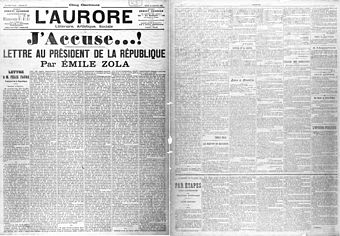
Dreyfus' trials revealed deep social injustice toward Jews, but they also revealed that not all non-Jews are anti-Semites. The most notable among the friends Jews found in this dark time is Emile Zola, who wrote a famous letter to the President of the Republic of France titled "J'Accuse!" (I accuse!), published in a major newspaper. You can find a wiki document featuring the original article and its translation here: http://en.wikisource.org/wiki/J%27accuse.
Tel Aviv Fashion Week. November 21-23, 2011 – Tourist Israel Travel Guide
With thanks to Hannah, in my Etz Chayim Sixth Grade Class, check out this blurb about this exciting economic and artistic showcase in the coming weeks:
Tel Aviv Fashion Week. November 21-23, 2011 – Tourist Israel Travel Guide
For more information about the events of Tel Aviv Fashion Week, check out:
http://www.haaretz.com/print-edition/news/tel-aviv-gets-its-style-on-as-fashion-week-makes-roaring-return-1.391826
http://blogs.forward.com/the-shmooze/138978/
Tel Aviv Fashion Week. November 21-23, 2011 – Tourist Israel Travel Guide
For more information about the events of Tel Aviv Fashion Week, check out:
http://www.haaretz.com/print-edition/news/tel-aviv-gets-its-style-on-as-fashion-week-makes-roaring-return-1.391826
http://blogs.forward.com/the-shmooze/138978/
Thursday, October 27, 2011
Tuesday, October 25, 2011
Sunday, October 9, 2011
Moroccan Jews Making Changes to America's Quintissential Ashkenazic Institution--Manishewitz
With Some Passing on Gefilte Fish, A New Lure: Fish 'Meatballs'
Manischewitz Takes Mediterranean Turn, Hoping to Spice Up Fare; 'What Is Cumin?'
By LUCETTE LAGNADO
For years, gefilte fish—plump little patties of minced fish—has been the Jewish holiday treat that some Jews love to hate.
These days, some say they've moved on. "Tradition is important but it needs updating—it doesn't have to be only about gefilte fish anymore," says Chany Konikov, a rabbi's wife in Southampton, N.Y., who also likes poached salmon and sushi.
Even Paul Bensabat wasn't that impressed when he tried it. "Boring," he says. "Pretty bland." And he's co-CEO of Manischewitz Co., one of the largest producers of gefilte fish. When Mr. Bensabat and partners took over the 123-year-old company, they decided to spice things up. One idea: Moroccan fish balls.
For more:With Some Passing on Gefilte Fish, Manischewitz Tries a New Mediterranean Lure - WSJ.com
Sunday, October 2, 2011
Awe-Inspiring Spectacle of the Yom Kippur Ritual of the Temple
Here are some sites from today's Etz Chayim sixth grade lesson on the awe-inspiring spectacle of the Yom Kippur Ritual of the Temple.
 First we looked at http://www.sci.brooklyn.cuny.
Next, we looked at the Israel Museum in Jerusalem's Interactive Second Temple Model (http://www.english.imjnet.org.
We concluded by opening a discussion (which we will continue on Wednesday) about what the purposes of the Temple sacrifices were (referencing http://www.jewfaq.org/

Next, we looked at the Israel Museum in Jerusalem's Interactive Second Temple Model (http://www.english.imjnet.org.
We concluded by opening a discussion (which we will continue on Wednesday) about what the purposes of the Temple sacrifices were (referencing http://www.jewfaq.org/
Tuesday, September 27, 2011
High Holy Day Music from throughout the Jewish World JNUL - Jewish National & University Library
As we start another year of studies, I invite my students and their families to check out this wonderful database of Jewish music from around the world for Selichot, Rosh Hashanah, and Yom Kippur.
JNUL - Jewish National & University Library
JNUL - Jewish National & University Library
Thursday, July 28, 2011
Saturday, March 5, 2011
Tuesday, February 22, 2011
Fit for the eaters AND fit for the workers
"Kasher" literally means (in Hebrew) "fit" or "suitable." Generally, this has been interpreted as meaning "fit for eating." Today, there are important campaigns within multiple Jewish denominations (including the denominations most committed to traditional kashrut, Conservative and Orthodox Judaism) to make food fit for the animals who feed us and for the workers who prepare and serve our food. Here's an article about new certification processes for ethical labor standards.
Kosher establishments pledge ethical labor standards - chicagotribune.com
Kosher establishments pledge ethical labor standards - chicagotribune.com
Sunday, February 20, 2011
Article from The Guardian about growing up on a kibbutz
This article by Noam Shpancer highlights themes shared my sixth grade classroom by a parent who also grew up on a kibbutz. It is critical of the practice of raising children in "Children's Houses" and talks about how kibbutzim today are different.
Child of the collective | Life and style | The Guardian
Child of the collective | Life and style | The Guardian
Thursday, January 20, 2011
Monday, December 13, 2010
Naches from my students
My sixth graders at Congregation Etz Chayim, in Palo Alto, blew me away this past month. As part of my teaching on Israel, I gave them a quiz on Ancient Israel and the beginnings of Modern Zionism. It was similar to quizzes I had given in the past two years, but I raised the stakes... I offered an "extra-awesome bonus" which would give them automatic full-credit on the quiz plus a prize if they could give a well-conceived, thorough answer to the following question: What were the differences between traditional Jewish yearnings for a return the the Land of Israel and Theodor Herzl's Zionism? It was a serious question which I thought would allow one or two kids to show their deep understanding of the material we had covered. One or two, AT MOST, I thought could synthesize relevant answers.
I was wrong.
Five kids--eleven-year-old, mind you--gave AWESOME answers! So, I'm honoring them by sharing their responses to you. You'll see some recurrent themes. Other possible answers could have mentioned messianic beliefs about the connection between returning to the Land of Israel and the end of days, or traditional desires for a Davidic monarchy versus Herzl's ideas about more modern, European-style political structures, or traditional theological arguments versus cultural, pragmatic arguments for a Jewish homeland.
Answer 1, from E.
The difference between Herzl's Zionism and traditional Zionism is that Herzl wanted to just get the Jews away from the pogroms and other events; he wanted to bring them to another country/state (Uganda), even if it wasn't Israel. He wanted to get the Jews away from harm, even if it made it harder to get them back into Eretz Yisrael. Traditional the Jews thought only Israel was fit for the Jewish homeland and that any other place would be almost against God's will.
Answer 2, from M.
The difference between Theodor Herzl's Zionism and traditional yearnings to return Jews to Israel was the fact that Herzl's idea was Political Zionism. Herzl was willing to negotiate with other world leaders to set up a political State of Israel. He knew Jews would need a place to live, and fast. Anti-Semitism was growing around the world, in the form of pogroms, and the Jewish people needed shelter. Herzl continuously stressed the fact that the Jewish State could be anywhere; he even suggested Argentina. The difference of Herzl's Zionism is to set up a political Jewish country as opposed to be able to specifically in Palestine. The traditional yearning was the hope to live in Palestine as a culture.
Answer 3, from D.
Theodor Herzl, unlike traditional Jewish nationalism, believed that this Jewish safe haven could be anywhere and that getting land in Israel was less important than having a Jewish country run by Jews, with Jews in control of the government and in the majority. He wanted eventually to settle in Israel, but he knew anywhere would do temporarily. Traditional nationalism was that this place needed to be in Israel--the Promised Land.
Answer 4, from O.
Herzl's Zionism was more to protect his people and have a place where they could fit in than was traditional yearnings for Israel. The traditional yearnings were people wanting God to let them go back to their Promised Land, where they belong. Herzl became a Zionist because he gave up hope of Jews ever being able to fit in. That fact made him stand out. When the other Zionists heard the Uganda plan, many of them were too traditional to accept it. They said that they would only accept the Promised Land, not some random part of Africa. Herzl was all for the plan, hoping it would build a safe haven for Jewish and stop our people's suffering.
Answer 5, from V.
Herzl's Zionism was the belief that Jews should have their own state where they don't have to deal with pogroms and other antisemitic attacks. On the other hand, returning to the Land of Israel as the "Promised Land" will not cease the antisemitic attacks, it will only fulfill the Jews' spiritual beliefs.
I was wrong.
Five kids--eleven-year-old, mind you--gave AWESOME answers! So, I'm honoring them by sharing their responses to you. You'll see some recurrent themes. Other possible answers could have mentioned messianic beliefs about the connection between returning to the Land of Israel and the end of days, or traditional desires for a Davidic monarchy versus Herzl's ideas about more modern, European-style political structures, or traditional theological arguments versus cultural, pragmatic arguments for a Jewish homeland.
Answer 1, from E.
The difference between Herzl's Zionism and traditional Zionism is that Herzl wanted to just get the Jews away from the pogroms and other events; he wanted to bring them to another country/state (Uganda), even if it wasn't Israel. He wanted to get the Jews away from harm, even if it made it harder to get them back into Eretz Yisrael. Traditional the Jews thought only Israel was fit for the Jewish homeland and that any other place would be almost against God's will.
Answer 2, from M.
The difference between Theodor Herzl's Zionism and traditional yearnings to return Jews to Israel was the fact that Herzl's idea was Political Zionism. Herzl was willing to negotiate with other world leaders to set up a political State of Israel. He knew Jews would need a place to live, and fast. Anti-Semitism was growing around the world, in the form of pogroms, and the Jewish people needed shelter. Herzl continuously stressed the fact that the Jewish State could be anywhere; he even suggested Argentina. The difference of Herzl's Zionism is to set up a political Jewish country as opposed to be able to specifically in Palestine. The traditional yearning was the hope to live in Palestine as a culture.
Answer 3, from D.
Theodor Herzl, unlike traditional Jewish nationalism, believed that this Jewish safe haven could be anywhere and that getting land in Israel was less important than having a Jewish country run by Jews, with Jews in control of the government and in the majority. He wanted eventually to settle in Israel, but he knew anywhere would do temporarily. Traditional nationalism was that this place needed to be in Israel--the Promised Land.
Answer 4, from O.
Herzl's Zionism was more to protect his people and have a place where they could fit in than was traditional yearnings for Israel. The traditional yearnings were people wanting God to let them go back to their Promised Land, where they belong. Herzl became a Zionist because he gave up hope of Jews ever being able to fit in. That fact made him stand out. When the other Zionists heard the Uganda plan, many of them were too traditional to accept it. They said that they would only accept the Promised Land, not some random part of Africa. Herzl was all for the plan, hoping it would build a safe haven for Jewish and stop our people's suffering.
Answer 5, from V.
Herzl's Zionism was the belief that Jews should have their own state where they don't have to deal with pogroms and other antisemitic attacks. On the other hand, returning to the Land of Israel as the "Promised Land" will not cease the antisemitic attacks, it will only fulfill the Jews' spiritual beliefs.
Thursday, December 2, 2010
Wednesday, December 1, 2010
Hanukkah celebrations and stories from around the world
Be'chol Lashon/In Every Tongue is an organization offering educational resources and programs highlighting the diversity of Jewish customs and practices around the world. They offer here eight bits about Hanukkah as it is practiced by diverse Jewish communities: Chanukah around the World: 8 Ways to Celebrate.
Another custom is practiced in Italy and Yemen--reading a book called Megillat Antiochus.
For more resources on Hanukkah around the world:
Be'chol Lashon: Educational Resources: Holidays: Chanukah
Another custom is practiced in Italy and Yemen--reading a book called Megillat Antiochus.
For more resources on Hanukkah around the world:
Be'chol Lashon: Educational Resources: Holidays: Chanukah
Subscribe to:
Posts (Atom)